Welcome to the Rubinstein-Taybi Syndrome Foundation Community
Tied Together. Advancing Research. Empowering the Rubinstein-Taybi Community.




What is Rubinstein-Taybi Syndrome?
Rubinstein-Taybi Syndrome (RTS) is a rare genetic neurodevelopmental disorder that can affect every body system. Occuring in approximately 1 out of every 150,000 live births, RTS is caused by spontaneous mutations in the CREBBP or EP300 genes, with a small number of cases inherited from parents. RTS does not discriminate and has been observed across ethnicities, localities, and genders. The condition is characterized by intellectual disability, along with clinical and behavioral phenotypes.
Currently, there are no disease-treating therapies available to the RTS community; and symptom-treating therapies are limited. Our goal is to change that.
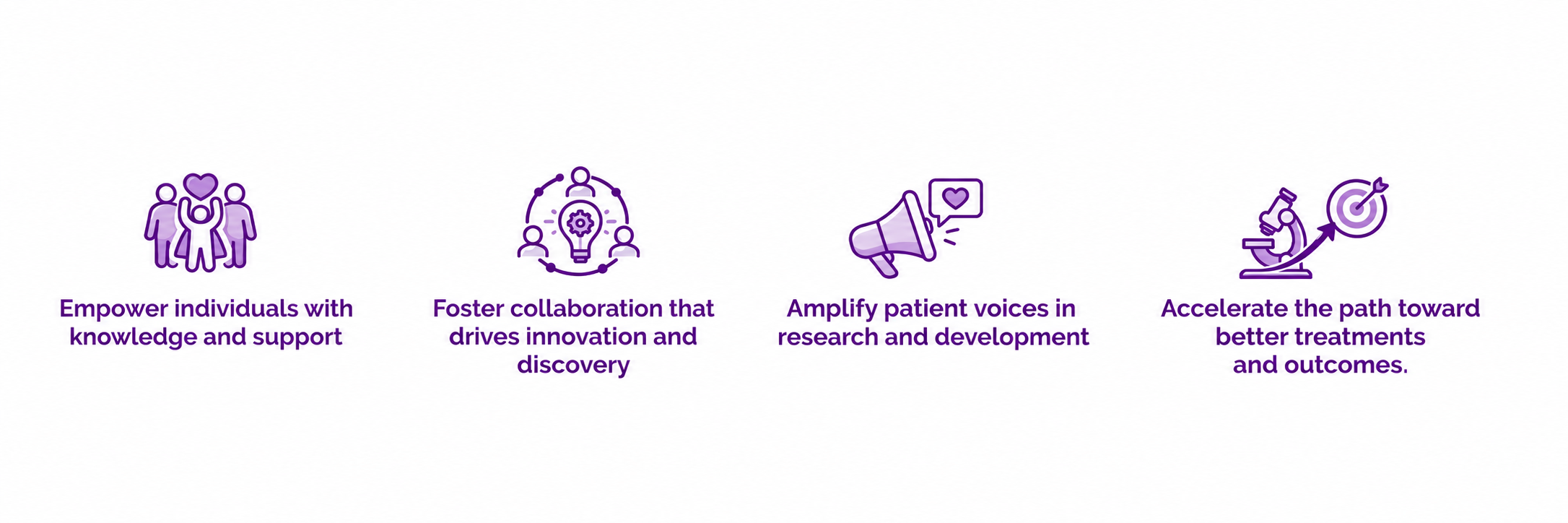
Our Shared Mission
Rare diseases require collective action. By bringing together patients,
caregivers, clinicians, researchers, and industry partners, we aim to:
For Patients &
Caregivers:
If you have been newly diagnosed with Rubinstein-Taybi Syndrome (RTS), or caring for someone who is welcome. You may be navigating unfamiliar medical language, difficult decisions, and emotional uncertainty. We are here to help you find clarity, connection, and support.
Receiving a rare disease diagnosis can feel overwhelming and isolating, and you may have more questions than answers right now. We want you to know one important thing from the start: you are not alone.
This website was created for people just like you. We recognize that every journey is unique, but many of the uncertainties you may be feeling are shared by others who have walked this path before.
And if you are a community member, family member, or caregiver who has been walking this path for sometime, please consider this website the newest asset in your care team’s portfolio. Together, we can raise awareness, invest in research, and pursue potentially life changing therapies.
Our goal at Rubinstein-Taybi Syndrome Foundation is to tie together the stakeholders in this mission, and that starts with the most important stakeholders: our community.
-
Rubinstein-Taybi Syndrome (RTS) is a rare genetic neurodevelopmental disorder that can affect every body system. Occurring in approximately 1 out of every 125,000 live births, RTS is caused by a spontaneous mutation in the CREEBP or EP300 genes, with a small number of cases inherited from parents. RTS does not discriminate and has been observed across ethnicities, localities, and genders. The condition is characterized by intellectual disability, along with clinical and behavioral phenotypes.
Individuals with RTS may have broad thumbs and halluxes (big toes), highly arched eyebrows, microcephaly, a distinctive angular nose and mouth, low-set ears, down-slanted eyes, dental anomalies such as a narrow palate and talon cusps, and may be short in stature. RTS is often recognized at birth through a clinical assessment of these notable physical traits and characteristics. Genetic testing can confirm clinical observations. Infants with RTS may struggle with feeding, leading to complications with weight gain, respiratory issues, constipation, and recurring infection.
In early childhood, individuals with RTS often exhibit signs of developmental delays. Infants and children with RTS can benefit greatly from early intervention and therapy programs designed to support gross and fine motor, and early language development. And it can be helpful to monitor developmental and growth milestones according to current guidelines established by the RTS research community, instead of growth charts intended for the typically developing general population.
Individuals with RTS are believed to have a normal life expectancy, but have to navigate the physical, cognitive, and social challenges that accompany their unique circumstances. Independence and participation in everyday life varies considerably, with some folks remaining at home with family, others living in a specialized care facility or residence, and a small percentage even living independently with support from a caregiver.
-
Individuals with RTS may have broad thumbs and halluxes (big toes), highly arched eyebrows, microcephaly, a distinctive angular nose and mouth, low-set ears, down-slanted eyes, dental anomalies such as a narrow palate and talon cusps, and may be short in stature. RTS is often recognized at birth through a clinical assessment of these notable physical traits and characteristics. Genetic testing can confirm clinical observations. Infants with RTS may struggle with feeding, leading to complications with weight gain, respiratory issues, constipation, and recurring infection.
In early childhood, individuals with RTS often exhibit signs of developmental delays. Infants and children with RTS can benefit greatly from early intervention and therapy programs designed to support gross and fine motor, and early language development. And it can be helpful to monitor developmental and growth milestones according to current guidelines established by the RTS research community, instead of growth charts intended for the typically developing general population.
Individuals with RTS are believed to have a normal life expectancy, but have to navigate the physical, cognitive, and social challenges that accompany their unique circumstances. Independence and participation in everyday life varies considerably, with some folks remaining at home with family, others living in a specialized care facility or residence, and a small percentage even living independently with support from a caregiver.
For Researchers and Industry Leaders:
Your partnership matters.
Progress in rare disease research depends on collaboration, shared knowledge, and meaningful engagement with the patient community. This platform serves as a bridge between those living with Rubinstein-Taybi Syndrome and those working to understand and treat it.
Our research strategy focuses on building the scientific foundation needed to move from understanding Rubinstein-Taybi Syndrome to developing effective treatments.
Through the BRIDGE Campaign, we are connecting families, clinicians, and scientists to accelerate research progress in RTS. Our goal is to raise $2 million to establish the infrastructure needed to support discovery, collaboration, and the development of future therapies.
Together, we can transform patient experience into scientific insight and scientific insight into meaningful treatments.
Researchers and industry partners are invited to connect with us to explore collaborative opportunities.
Contact: Rcortese@rubinsteintaybi.org
-
Rubinstein-Taybi Syndrome Foundation is committed to fostering research partnerships that prioritize transparency, scientific rigor, and respect for the patient community.
We work with academic institutions, clinicians, industry partners, and advocacy organizations to support research that advances understanding of Rubinstein-Taybi Syndrome and improves outcomes for individuals living with the condition.
Our collaboration principles include:
• Patient-centered research design
• Ethical data stewardship and privacy protections
• Transparent communication with families and investigators
• Responsible partnerships with industry and academic researchers
By working together, we can ensure that research efforts reflect both scientific priorities and the real-world needs of individuals and families affected by RTS.
-
The RTS community plays a critical role in advancing research.
Through the BRIDGE initiative, we are building the infrastructure needed to connect families, clinicians, and scientists in a shared effort to accelerate discovery.
Key initiatives include:
• Development of a global Rubinstein-Taybi Syndrome patient registry
• Support for natural history studies and longitudinal data collection
• Facilitating connections between families and research opportunities
• Educational resources to help families understand and participate in research
These efforts will help ensure that researchers have access to the high-quality data needed to better understand RTS and design future therapeutic studies.
-
Rubinstein-Taybi Syndrome research is entering an exciting new era, with increasing interest in epigenetics, chromatin biology, and targeted therapies.
The RTS Foundation aims to support and catalyze scientific progress by:
• Encouraging cross-institution collaboration among leading research centers
• Supporting pilot research initiatives and early-stage scientific exploration
• Promoting data sharing and interdisciplinary collaboration
• Preparing the RTS community for future clinical trials and therapeutic development
By building the scientific and community infrastructure today, we can help accelerate the pathway toward meaningful treatments tomorrow.
-
Research on Rubinstein-Taybi Syndrome (RTS) is advancing thanks to the dedication of families, clinicians, and scientists around the world. Studies are helping us better understand how changes in the CREBBP and EP300 genes affect development, learning, and health.
Current areas of research include:
• Understanding the role of epigenetics and chromatin biology in RTS
• Identifying the natural history and medical needs of individuals with RTS across the lifespan
• Studying neurodevelopment, learning, and behavioral profiles associated with RTS
• Exploring potential therapeutic pathways and future treatments
Researchers are also working to identify biomarkers—measurable biological signals that can help scientists better understand the condition and evaluate potential treatments. One such effort is an ongoing biomarker study led by Dr. Jacqueline Harris at Kennedy Krieger Institute. This research aims to identify biological markers that could help track disease features and support the development of future clinical trials.
The RTS Foundation works closely with researchers and clinicians to support studies that improve care today and move us closer to treatments tomorrow.
As new research opportunities and clinical studies become available, we will share updates with the community and help families learn how they can participate.
Families who participate in research play a vital role in advancing knowledge and improving the future for individuals with Rubinstein-Taybi Syndrome.
Making complex terminology simple, accessible, and empowering.
Explore our glossary of commonly used genetics, research, and Rubinstein-Taybi syndrome terms.
Designed to help individuals, families, and caregivers learn with confidence.
Donate / Fund Raising Roadmap
Join RTS Foundation’s Circle of Hope campaign and help change what an RTS diagnosis means for individuals and families.